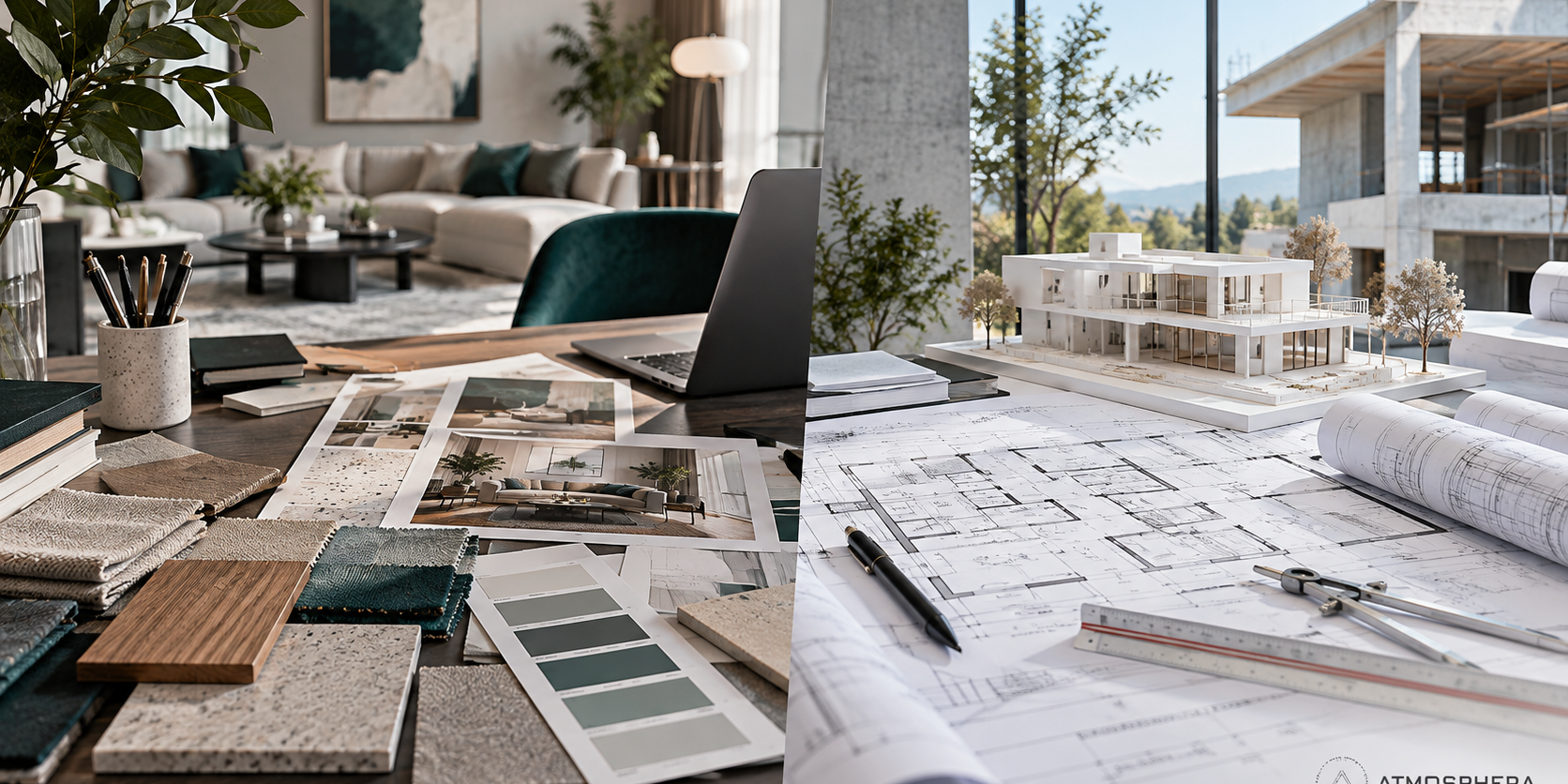
In short: an architect works primarily with the building, spatial structure and architectural solutions, while an interior designer develops the functionality, appearance, materials, lighting, furniture and details within the interior space.
For a typical interior renovation, an interior designer may often be the main professional you need. If the project affects the structure, architectural elements of the building, its use, or requires documentation from other design disciplines, an architect and relevant engineers may also be necessary.
 Are Interior Designers and Architects Competitors?
 Are Interior Designers and Architects Competitors?
No. This is one of the most important distinctions to understand.
An interior designer and an architect are not simply two versions of the same profession. They may work on the same property, but they approach the project from different perspectives.
An architect will typically focus on:
- the building as a whole;
- its form and organization;
- architectural space;
- relationships between rooms and areas;
- construction and regulatory requirements;
- coordination with other design disciplines.
An interior designer focuses more closely on:
- how people use the space;
- functional planning;
- furniture;
- materials;
- colours;
- lighting;
- details;
- the overall experience of the interior.
What Does an Interior Designer Do?
An interior designer works with the internal space and the way it should function in everyday life.
The process can begin with an empty apartment in a new development and continue all the way through to a completely furnished and finished interior.
Depending on the project scope, an interior designer may develop:
- functional space planning;
- furniture layouts;
- interior design concepts;
- colour palettes;
- materials and flooring;
- 3D visualizations;
- lighting plans;
- socket and switch positions;
- ceiling plans;
- wall elevations;
- custom kitchens and furniture;
- material and product specifications;
- decoration;
- design supervision;
- coordination during implementation.
What Does an Architect Do?
An architect works within the broader context of the building itself and the architectural organization of space.
Depending on the project, this may include:
- architectural concepts;
- space planning;
- new buildings;
- extensions;
- additional storeys;
- facades;
- alterations to architectural elements;
- major conversions;
- coordination with structural and engineering specialists;
- architectural documentation appropriate to the particular project.
When a project goes beyond interior furnishing and decoration, the architect may play a central role.
Where Do the Roles of Architect and Interior Designer Overlap?
There are several areas in which their work can overlap.
These may include:
- space planning;
- circulation;
- ergonomics;
- furniture positioning;
- lighting;
- material selection;
- visual concepts;
- detailing.
The difference is usually how deeply each professional develops a particular area and what their primary responsibility is within the project.
The Main Difference: The Building vs the Interior Experience
A simple way of understanding the distinction is:
The architect often approaches the space from the building inward.
The interior designer often approaches the space from the person and their way of living outward.
This is not an absolute boundary. Good architecture must consider people, while good interior design must respect the architecture.
However, interior design usually goes much deeper into everyday questions such as:
- Is there enough storage?
- Where should the sofa be positioned?
- Can the wardrobe doors open comfortably?
- How will the kitchen actually be used?
- Where should sockets be positioned?
- How should the worktop be illuminated?
- Which material is practical for this area?
- How should the room look and feel?
Interior Designer vs Architect – Comparison
| Area | Interior Designer | Architect |
|---|---|---|
| Interior concept | Primary focus | May be involved |
| Functional planning | Yes | Yes |
| Interior 3D visualizations | Common | Possible |
| Materials and colours | Primary focus | Possible |
| Lighting | Interior and functional focus | May contribute to the general concept |
| Custom furniture | Often developed in detail | Possible depending on project scope |
| New construction | Not the primary role | Core field |
| Building architecture | Not the primary role | Core field |
| Facades | Usually not | Yes |
| Building-related alterations | Works within the interior design scope | Often required depending on the intervention |
| Furnishing | Primary focus | Not always included |
| Decoration | Yes | Not necessarily |
| Interior implementation | Often actively involved | Depends on the project and service scope |
When Should You Choose an Interior Designer?
An interior designer is usually the logical choice when the main challenge concerns the internal space.
For example:
- you have purchased a new apartment that needs furnishing;
- you are planning a complete renovation;
- you need a better functional layout;
- you are unsure how to arrange the furniture;
- you need a new kitchen;
- you require custom-made furniture;
- the lighting needs to be designed;
- materials need to be selected and coordinated;
- you want 3D visualizations;
- you need furnishing and installation coordination;
- you want complete turnkey implementation.
When Should You Choose an Architect?
An architect becomes particularly important when the project affects the architecture of the building itself or goes beyond a conventional interior renovation.
Examples include:
- designing a new house or building;
- major architectural conversion;
- building extensions;
- adding another storey;
- facade alterations;
- substantial changes to the building organization;
- projects requiring coordination with structural or engineering disciplines.
The precise need for designers and documentation depends on the particular intervention and the existing property.
When Do You Need Both an Architect and an Interior Designer?
For more complex projects, using both may be the most effective approach.
Imagine purchasing an older house that requires major restructuring.
The architect may work on:
- architectural alterations;
- the organization of the building;
- external appearance;
- coordination with relevant specialists.
The interior designer can then develop:
- how each room will function;
- the interior concept;
- lighting;
- kitchens;
- furniture;
- materials;
- decoration;
- interior details;
- final furnishing.
This allows the architecture and interior to develop as one coordinated system rather than as two disconnected projects.
For a New-Build Property, Do You Need an Architect or an Interior Designer?
If you are buying an already constructed apartment in a new development and want to design the internal space, the interior designer will usually be your primary specialist.
Ideally, they should be involved before finishing works begin so that they can plan:
- functional layouts;
- electrical positions;
- plumbing points;
- lighting;
- flooring;
- bathrooms;
- the kitchen;
- furniture.
If the required changes affect architectural or other specialized project elements, the relevant professionals should also be involved.
If We Want to Move a Wall, Who Should We Contact?
There is no universal answer based simply on the word “wall”.
There is a major difference between:
- a lightweight non-load-bearing partition;
- an element with a structural function;
- a wall containing building services;
- an alteration affecting other parts of the building.
The interior designer may propose a new functional layout, but if there is any question regarding structure or specialized documentation, the appropriate qualified professional should be involved.
Structural elements should never be altered solely on the basis of an interior design idea.
Who Should Design the Kitchen?
Within an interior project, the kitchen is usually one of the areas developed in greatest detail by the interior designer.
This may include:
- functional zones;
- appliances;
- worktops;
- storage;
- lighting;
- electrical outlets;
- mechanisms and hardware;
- materials;
- colours;
- furniture drawings.
A good kitchen is not simply a collection of cabinets. It needs to be coordinated with the electrical system, plumbing, lighting and the way the household actually uses the space.
Who Designs Custom Furniture?
Detailed custom furniture design is often part of the interior designer’s working documentation.
This may include:
- kitchens;
- wardrobes;
- TV units;
- bookcases;
- hallway storage;
- bathroom cabinetry;
- desks;
- children’s furniture;
- decorative wall panels.
Complex custom solutions require detailed working documentation.
See also the difference between concept, technical and working interior design documentation.
Who Chooses the Materials and Colours?
This is one of the core areas of interior design.
However, a material should not be selected purely because of its appearance.
For each material, the designer should consider:
- where it will be used;
- how heavily it will be used;
- how it is maintained;
- how it ages;
- what it will be combined with;
- how it looks under different lighting;
- how it affects the overall budget.
Who Creates the 3D Visualizations?
3D visualization is a standard part of many interior design projects.
It allows the client to see:
- the layout;
- colours;
- materials;
- furniture;
- lighting;
- the overall atmosphere.
However, it is important to remember that a visualization does not replace technical drawings.
Who Oversees the Implementation?
This depends on the scope of the agreed service.
Within an interior project, the designer may provide design supervision and monitor whether the implementation follows the approved concept and documentation.
This may include:
- site visits;
- checking details;
- clarifications with contractors;
- checking materials;
- coordinating necessary changes;
- coordination of furniture and installations.
Design supervision should not be confused with continuous construction supervision.
Does an Interior Designer Only Decorate?
No.
This is one of the most common misconceptions about interior design.
Decoration is only one part of an interior project.
A complete project can begin long before cushions, artwork and decorative accessories are selected.
The work may include:
- a new functional layout;
- electrical planning;
- lighting;
- plumbing positions;
- ceilings;
- flooring;
- bathrooms;
- kitchens;
- custom furniture;
- detailed drawings.
See our complete guide explaining what a complete interior design project includes.
Can an Architect Also Work as an Interior Designer?
Yes.
Some architects work extensively in interior design, while some architectural practices have dedicated interior design teams.
For this reason, the professional title alone does not determine whether someone is the right specialist for your project.
Look instead at:
- completed interiors;
- the quality of technical documentation;
- furniture detailing;
- material coordination;
- experience with implementation;
- the actual scope of the service offered.
How Do You Choose the Right Professional?
Rather than starting with the question “architect or interior designer?”, begin with:
“What problem do I actually need to solve?”
If the issue is:
- how to organize the home;
- how to furnish it;
- how to design the kitchen;
- which materials to choose;
- how to design the lighting;
- how to create custom furniture;
then an interior designer is probably the first professional you should speak to.
If the task involves:
- a new building;
- major architectural restructuring;
- a facade;
- an extension;
- an additional storey;
- a substantial intervention in the building architecture;
then an architect will be required, along with other specialists where appropriate.
What Should You Ask During the First Meeting?
Regardless of who you choose, ask for clear answers to the following questions:
- What exactly is included in the service?
- Which drawings will I receive?
- Are 3D visualizations included?
- Do you design custom furniture?
- Do you provide technical plans?
- Do you work with contractors?
- Is design supervision available?
- Who coordinates the different specialists?
- How are changes managed?
- How is the budget controlled?
See also our guide on how to choose an interior designer and what to ask before starting a project.
What Matters More – Qualifications or Portfolio?
Education and professional training are important, but clients should also consider whether the professional has practical experience with the specific type of project they are planning.
Look for:
- completed projects;
- not only visualizations;
- technical drawings;
- before-and-after examples;
- custom furniture details;
- real materials;
- finished interiors.
A portfolio reveals not only aesthetic style, but also the types of real problems the professional has already solved.
Should You Speak to an Architect or Interior Designer First?
If you are unsure which professional you need, begin by discussing the actual project requirements.
A good professional should be able to say:
“This is within my scope.”
or
“We need to involve an architect, structural engineer or another specialist here.”
That is much more reliable than expecting one person to take responsibility for work outside their expertise.
How Does This Work in a Complete Interior Design Project?
Within a complete interior project, the interior designer coordinates multiple decisions as one system:
- functionality;
- visual design;
- technical drawings;
- materials;
- lighting;
- furniture;
- budget;
- deliveries;
- implementation.
Architects, engineers and other specialists are involved where required by the project.
This is why a well-organized project follows a clear sequence. See the stages of the interior design process step by step.
Interior Designer or Architect – Who Should You Choose?
If your main goal is to develop the functionality, appearance, materials, furniture, lighting and implementation of an internal space, an interior designer will usually be the most direct choice.
If the project affects the architecture of the building, involves new construction or significant architectural alterations, an architect and potentially other specialist designers will be required.
For complex projects, the strongest solution is often not choosing one instead of the other, but ensuring that the right professionals work together.
Interior Design with Atmosphera
Atmosphera develops complete interior design projects for residential and commercial spaces – from functional planning and 3D visualizations to technical solutions, custom furniture, material selection, design supervision and project implementation.
Where a project requires additional design disciplines, the process should be coordinated with the relevant professionals before implementation begins.
Discover interior design and turnkey project execution by Atmosphera.
Frequently Asked Questions
What is the main difference between an architect and an interior designer?
An architect primarily works with the building and its architectural organization, while an interior designer focuses on functionality, appearance, materials, lighting, furniture and details within the internal space.
Do I need an architect for an apartment renovation?
Not for every renovation. For a standard interior renovation without substantial changes to the building, an interior designer may be the main professional. More significant architectural or structural interventions require the appropriate qualified specialists.
Do I need an interior designer for a new-build apartment?
An interior designer can be particularly valuable in a new-build property because the layout, electrical positions, lighting, kitchen, bathrooms and furniture can be planned before finishing work begins.
Can an architect do interior design?
Yes. Some architects work extensively in interior design. The important thing is to examine their specific experience, portfolio and service scope.
Can an interior designer change the layout?
An interior designer can develop a new functional layout, but if the proposed changes affect structural, architectural or other specialized elements, the appropriate professionals must also be involved.
Who designs the kitchen – an architect or an interior designer?
Within an interior project, the kitchen is often developed in detail by the interior designer, including layout, furniture, materials, appliances, lighting and coordination with building services.
Who designs custom furniture?
Interior designers often develop custom furniture as part of the working interior design documentation.
Who chooses colours and materials?
The selection and coordination of colours and interior materials are generally a core part of an interior designer’s work.
Who creates the 3D visualizations?
3D visualizations are widely used in interior design and allow the client to understand and refine the concept before implementation.
Who should be involved if a wall is being moved?
It depends on the type of wall and the nature of the intervention. Structural or specialized changes require the appropriate qualified professional and, where necessary, a structural engineer.
What is more important – choosing an architect or an interior designer?
The most important step is defining the actual scope of the project and determining whether the specific professional has experience with that type of work.
Should an architect and interior designer work together?
For more complex projects, this can be very useful because architectural and interior decisions can be coordinated from the beginning.
Does an interior designer only choose furniture and decoration?
No. A complete interior design project may include functional planning, technical plans, lighting, plumbing positions, ceilings, flooring, custom furniture and detailed implementation documentation.
When should I contact an interior designer?
Ideally, before renovation work begins and before important decisions are made about electrical systems, flooring, kitchens, lighting and furniture.
Who should I choose for a complete turnkey interior?
If the main objective is the design and implementation of the interior space, look for a studio with experience in interior design, technical documentation, custom furniture, coordination and implementation. Architects and other professionals can then be involved where the project requires them.