Design Supervision in Interior Design – What Is It and Why Is It Important?
Even the best interior design project can deviate significantly from the original concept if decisions are changed during renovation, details are interpreted differently, or contractors work without sufficient coordination.
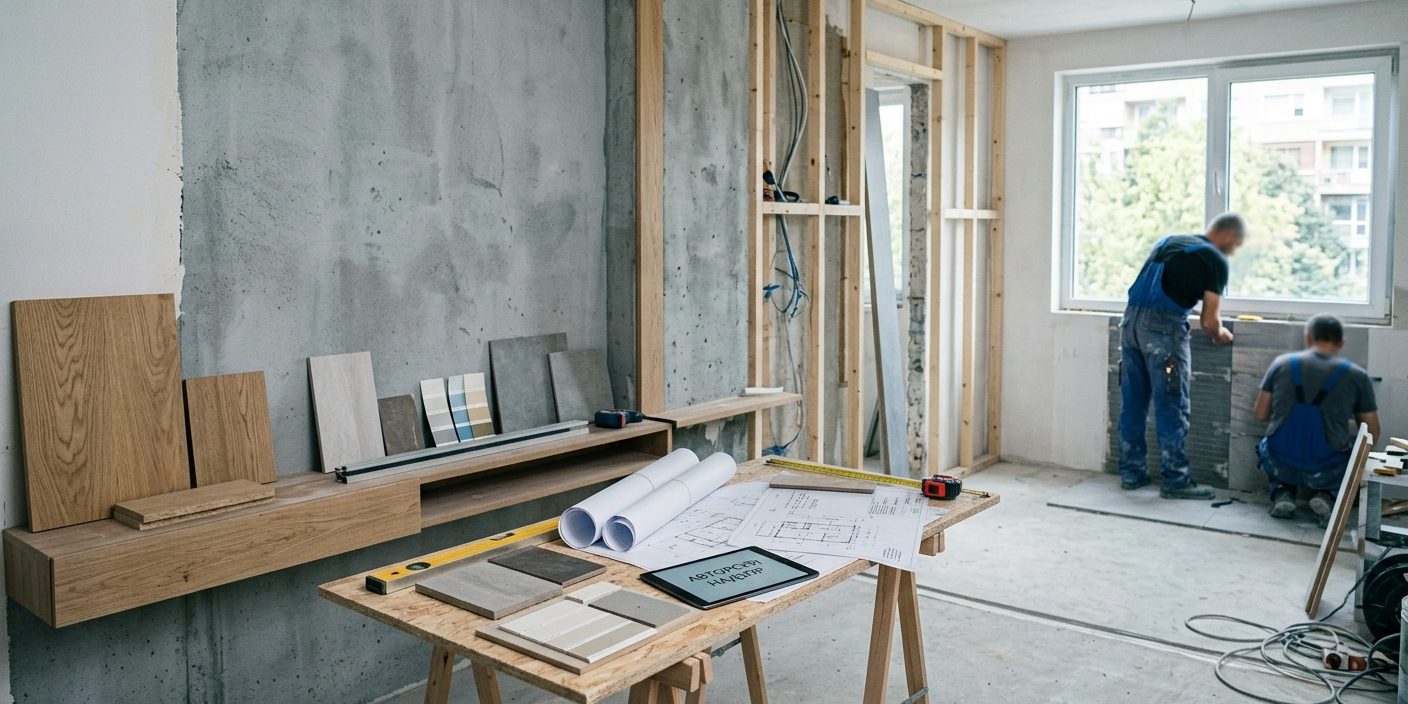
Design supervision in interior design is the process in which the designer follows the implementation of the project and checks whether the key decisions, materials, dimensions, details and visual concept are being executed in accordance with the approved interior design.
It does not mean that the designer remains on the construction site every day, and it does not replace construction supervision, the site manager or specialist designers. Its purpose is different – to preserve the connection between the project on paper and the completed interior.
What Is Design Supervision in Interior Design?
Once the design phase is complete, one of the most critical stages begins – implementation.
Everything may be clearly defined in the project:
where each wall should be positioned;
where electrical outlets should be located;
how the lighting should be arranged;
the levels of suspended ceilings;
how different flooring materials should meet;
how the kitchen should look;
how the furniture should be designed;
which materials and colours have been approved.
On the construction site, however, real-world questions begin to appear.
For example:
a specified material is no longer available;
an existing wall has different dimensions than expected;
an installation runs through an unexpected location;
the furniture manufacturer proposes a technical change;
a contractor has a question about a particular detail;
the position of a light fixture needs to be clarified on site.
Design supervision helps ensure that these decisions are not made independently of the original concept.
Why Is a Good Interior Design Project Not Enough on Its Own?
Detailed project documentation is the foundation of good implementation, but the real construction process almost always creates situations that cannot be fully predicted in advance.
The more complex the interior, the more interconnected decisions it contains.
A change to a ceiling, for example, may affect:
lighting;
curtains;
built-in furniture;
ventilation;
air conditioning;
the height of decorative wall panels.
This is why design and implementation should not be treated as completely separate processes.
The main purpose is to keep the completed interior as close as possible to the developed and approved design.
This means checking:
whether dimensions correspond to the project;
whether the positions of key elements are correct;
whether the materials match those approved;
whether colours and finishes are correct;
whether specific design details are being implemented properly;
whether a change in one area could cause a problem elsewhere.
Design supervision is particularly valuable in interiors with extensive custom furniture, concealed lighting, bespoke wall treatments, decorative finishes and non-standard details.
What Does Design Supervision Usually Include?
The exact scope depends on the contract and the way the interior design studio structures the service.
It may include:
periodic site visits;
checking implementation against the project;
clarifying design details;
communication with contractors;
coordination of acceptable changes;
checking samples and materials;
confirming colours and finishes;
checking custom furniture;
coordination during installation;
clarification of lighting details;
resolving design-related questions that arise during implementation.
Does Design Supervision Mean Daily Presence on Site?
Usually not.
Design supervision does not normally mean that the designer remains on site throughout every construction activity.
Site visits are generally carried out at key stages of implementation or when a specific decision needs to be checked.
For example:
before walls or ceilings are closed;
after the main electrical positions have been installed;
during the execution of specific finishes;
before complex furniture is manufactured;
during furniture installation;
when a discrepancy appears between the project and actual site conditions.
Are Design Supervision and Construction Supervision the Same Thing?
No.
They are different functions.
Within interior design, design supervision primarily concerns the correspondence between the developed interior project and its implementation.
Construction supervision, technical site management and specialist design disciplines have different responsibilities and, depending on the project, may also be subject to specific regulatory requirements.
For this reason, interior design supervision should not be assumed to replace all other forms of control that may be required during construction.
What Does the Designer Check During a Site Visit?
The checks depend on the stage of the project.
During construction work, the designer may check:
the positions of partition walls;
niche dimensions;
heights;
preparation of openings;
floor and ceiling levels.
For installations:
electrical outlet positions;
switches;
lighting points;
plumbing connections;
connections for appliances;
air-conditioning positions.
During finishing works:
flooring;
joints;
colours;
wall finishes;
transitions between materials;
decorative details.
How Does Design Supervision Help with Custom Furniture?
Furniture is one of the areas where a small error can have a significant effect.
For example:
a wall is several centimetres different from the measured dimension;
an electrical outlet ends up behind a cabinet;
a plinth is not coordinated with the flooring;
an appliance requires different ventilation;
cabinet fronts interfere with each other when opened;
a decorative panel does not align with the ceiling.
With design supervision, these issues can be discussed before manufacturing or installation begins.
What Happens If the Actual Site Differs from the Design?
This is not unusual, especially when renovating existing properties.
After demolition, it may become apparent that there is:
a different wall thickness;
an unexpected structural column;
a concealed installation;
an uneven surface;
a difference in floor levels;
an element that cannot be relocated.
The goal should not simply be to “make something work on site”, but to find a solution that:
is technically possible;
preserves functionality;
does not compromise the rest of the project;
remains as close as possible to the approved concept.
How Does Design Supervision Reduce the Risk of Costly Mistakes?
Many expensive renovation mistakes are not necessarily caused by poor workmanship.
Sometimes they happen because an individual solution is executed correctly on its own but without considering how it relates to the rest of the interior.
For example, an electrical outlet may be installed correctly from a technical point of view but end up directly behind a built-in wardrobe.
Or a ceiling may be constructed well but leave insufficient space for the planned concealed curtain track.
Design supervision helps these relationships to be checked before they become costly problems.
Can Design Supervision Save Money?
It should not be viewed as a guarantee that the project will become cheaper.
However, it can help avoid costs associated with:
demolishing already completed work;
relocating electrical outlets;
repainting;
remaking furniture;
replacing unsuitable materials;
reinstallation;
unnecessary deliveries.
On larger projects, identifying one mistake at the right time can prevent several subsequent corrections.
Project documentation becomes a common reference point for:
construction teams;
electricians;
plumbers;
furniture manufacturers;
suppliers;
installers;
the interior designer.
The better these participants are coordinated, the lower the risk that different parts of the interior will begin to conflict with each other.
Does Design Supervision Guarantee a Perfect Result?
No single service can guarantee that a renovation will be completely free of problems.
The final result also depends on:
the quality of the design;
the contractors;
the materials;
communication;
measurement accuracy;
organization;
timely decision-making.
However, design supervision adds another important level of control – control over whether implementation remains consistent with the design concept and project documentation.
When Does Design Supervision Provide the Greatest Value?
It provides the greatest value when the project contains many interconnected bespoke solutions.
For example:
custom kitchens;
built-in wardrobes;
decorative panels;
concealed lighting;
special flooring;
non-standard doors;
bespoke furniture;
highly detailed bathrooms;
combinations of different materials.
In such interiors, the difference between “similar to the design” and “implemented according to the design” can be substantial.
The Short Answer: Why Is Design Supervision Important?
Design supervision in interior design helps preserve the approved concept and technical solutions during implementation. The designer follows key stages, clarifies details, coordinates necessary changes and reduces the risk of different contractors interpreting the project in different ways.
Its value is greatest in complex interiors where multiple technical, furniture and visual solutions need to work together as one coordinated system.
Design Supervision with Atmosphera
Atmosphera develops complete interior design projects for residential and commercial spaces – from functional planning and the visual concept to technical documentation, custom furniture, material selection and implementation.
During implementation, following the key design decisions helps ensure that the project does not remain merely an attractive visualization but becomes a consistently executed interior.
Design supervision is the process in which the designer follows the implementation to help ensure that the main decisions, materials and details are executed in accordance with the approved interior design project.
Is design supervision mandatory?
It depends on the type of project, the agreed scope and the nature of the work. In complex interiors it can significantly improve coordination and reduce the risk of deviations from the approved design.
Is design supervision the same as construction supervision?
No. In interior design, design supervision focuses on correspondence with the interior project. It does not replace construction supervision, technical site management or other professional functions where these are required.
Is the designer present on site every day?
Usually not. Visits are organized according to the agreed scope and normally focus on key stages or specific questions that require clarification.
What does the designer check during design supervision?
The designer may check dimensions, positions, materials, colours, lighting, furniture, finishes, flooring, details and other elements included in the interior design project.
Does design supervision include communication with contractors?
It may include clarification of design decisions and communication regarding specific details if this is part of the agreed service.
Can the design be changed during implementation?
Yes. Changes may sometimes be necessary because of actual site conditions, but they should be evaluated in relation to the rest of the project before being implemented.
Can design supervision prevent mistakes?
It cannot eliminate every risk, but it allows many discrepancies and problematic decisions to be identified and discussed before they result in more extensive rework.
Can design supervision help control the budget?
It does not guarantee a lower final cost, but it can reduce the risk of unnecessary expenses caused by repeated work, replacement of unsuitable materials or corrections to completed work.
Can design supervision help with the timeline?
Resolving project-related questions promptly can reduce delays when one contractor is waiting for a decision before the next activity can begin.
Is supervision useful for custom furniture?
It is particularly useful for complex custom furniture because dimensions, materials and details need to be coordinated with actual site conditions and the other elements of the interior.
When should design supervision begin?
It is most useful when the designer remains involved from the first key stages of implementation rather than only after the main construction work has already been completed.
What is the difference between design supervision and project management?
Design supervision focuses mainly on consistency with the design, while project management may include contractor organization, deliveries, schedules and many other operational activities.
Should design supervision be described in the contract?
Yes. The scope, number of visits, communication process, approval of changes and activities that are not included should ideally be defined in advance.
Is design supervision worthwhile for a complete interior project?
For a complex project involving multiple technical solutions, custom furniture, lighting and bespoke details, design supervision can provide considerable value because it helps ensure that the different parts are implemented as one coordinated whole.