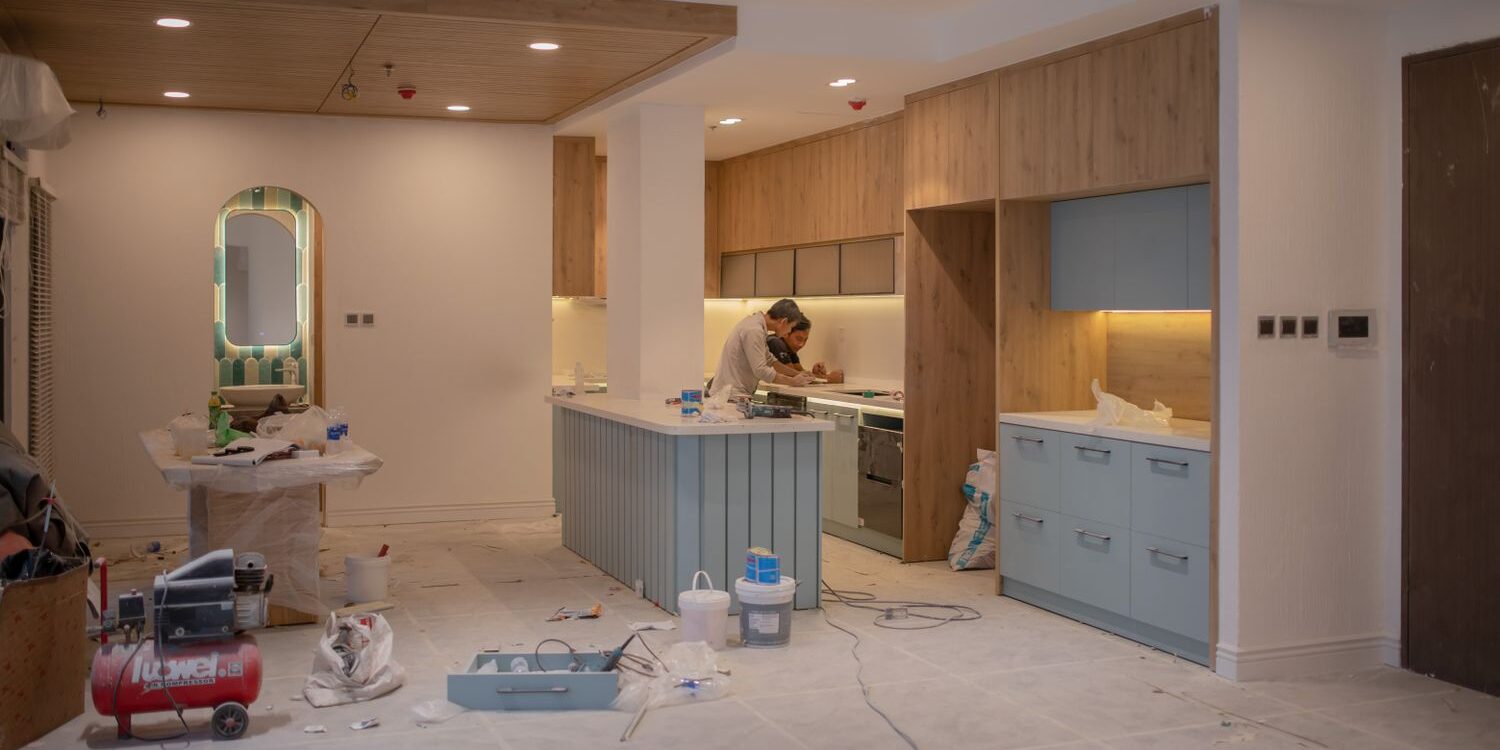
Renovations rarely fall behind schedule for one simple reason. More often a chain of dependencies goes wrong: the design is not approved, a door is ordered too late, a required delivery is missing, the kitchen changes after the electrical work, or the next contractor arrives before the room is ready. Time needs to be managed before renovation begins, not only after a deadline is missed.
In brief: finalize the important decisions early, build a dependency-based schedule, order long-lead items on time, define inspection milestones, leave realistic buffers and track approved changes. Every week, ask what is preventing the next activity from starting rather than focusing only on a claimed completion percentage.
Five common sources of renovation delays
Incomplete design. Moving power outlets or changing cabinetry after works begin causes rework. Unknown existing conditions. Strip-out can reveal damaged substrates or concealed services. Late orders. Bespoke doors, cabinetry and specialist finishes do not automatically arrive when the owner wishes to move in. Poor sequencing. Teams arrive at the wrong time or have to work around unfinished predecessors. Slow approvals and undocumented changes. Waiting for a decision can delay several dependent tasks.
These issues compound each other. A useful programme shows not only which contractor attends on which day but what must be completed before the following activity can begin.
Plan backward from the move-in requirements
Define what “ready to live in” really means: a usable bathroom, inspected safe installations, a functioning kitchen, cleaned rooms and the essential furniture installed. Then plan backward. Kitchen installation depends on finished walls and floors; production depends on verified dimensions; measurements depend on earlier building work.
Maintain a simple programme with task, start date, expected duration, predecessor, responsible party and acceptance criterion. A shared spreadsheet is sufficient for many projects if it contains real dependencies and everyone uses the current version.
A sample renovation sequence
| Stage | Prerequisite | Required handover |
|---|---|---|
| Survey and design | Access and agreed brief | Approved drawings and specifications |
| Quotation and contract | Sufficiently defined scope | Budget, responsibilities and milestones |
| Demolition | Protection and relevant permissions where required | Verified actual conditions |
| Services | Agreed layouts and appliance requirements | Photos, tests and checks before covering |
| Wet work and substrates | Accepted earlier work | Levels, waterproofing and drying requirements met |
| Finishes | Prepared substrates and available materials | Inspected finishes and protection |
| Furniture and equipment | Final survey and completed manufacturing | Installation and function checks |
| Final handover | Completed works and records | Snagging list, corrections and cleaning |
The table illustrates the order, not a guaranteed duration. Technical drying times, manufacturer specifications, site conditions and regulatory requirements must not be ignored to preserve an arbitrary date.
Understand the critical path
Some tasks can run in parallel; others are sequential. A floor finish cannot be installed until the substrate meets its technical requirements. Bespoke kitchen components may require verified dimensions and a long production slot. A chain of dependent tasks that determines the earliest feasible finish is the critical path.
Monitor these tasks separately. Accelerating an unrelated decorative activity will not help if the kitchen delivery or required inspection is still blocking completion. Solve the real bottleneck first.
Manage procurement as a separate programme
Keep a purchasing log with the exact item and model, specification, supplier, approval date, order date, confirmed lead time, delivery point, storage conditions, owner and current status. Materials may need secure, dry storage or special handling, while large furniture requires access and lifting arrangements.
Never substitute a “similar” product without checking the implications. Changing a built-in appliance can affect cabinet openings, ventilation, power supply and service access. The designer and affected trades should approve the substitute and update the specification before ordering.
Where to place contingency time
A time buffer is meant for real uncertainty, not for deliberately starting late. Consider additional allowance after stripping out an older property, around critical deliveries, before handover and where many contractors interact. There is no universal buffer percentage that suits every job. Estimate project-specific risks and retain the minimum technical curing periods required by product instructions.
An unrealistically tight schedule collapses under a minor problem. An unnecessarily loose one creates avoidable cost. The goal is a workable sequence with targeted reserves.
Six questions for the weekly project meeting
What was finished last week? What must be ready during the next one or two weeks? What is blocked? Which decisions must the owner make? Which deliveries are at risk? What approved changes affect cost or timing? Give each unresolved action a responsible person and deadline.
A statement that the job is “80% complete” is not especially useful. The remaining work may consist of many interconnected installations, tests and corrections. A concrete statement is better: “Bathroom tiling is complete, but the mirror installation awaits confirmation of its electrical outlet.”
What to do when the project is already late
Start by identifying the cause from the current programme, photographs, decision records and delivery status. Determine which delay affects the final completion date and which independent activities can be reordered safely. Ask for a recovery plan with specific changes, owners and new hold points, rather than another unsupported promise.
Sometimes extra staffing or resequencing can recover time, but not by skipping professional checks or required curing periods. Acceleration may increase costs and risk; agree the consequences before proceeding.
Design changes have a time cost too
Moving a shower, changing a kitchen layout or selecting a different finish can require new drawings, measurements, products and installation work. Record the reason, impact on completed work, revised materials, additional price, new duration and written approval. Connect the our renovation cost-estimate guide with the programme so decisions are evaluated on total project cost rather than the product price alone.
Managing renovation from another city or country
You do not have to be on site daily if a competent coordinator is appointed. Use one shared photo repository, weekly video updates, inspection records and written change approvals. Decide in advance which milestones require your personal presence, such as finish samples, important design choices or final handover. See our supervision and project-management guide for the distinction between project management and design supervision.
Agree a realistic contract programme
The agreement should define start and finish, stage handover criteria, materials responsibility, effects of delayed owner decisions, procedures for unforeseen conditions and how programme variations are approved. Clauses on penalties, suspension or termination need to reflect the actual agreement and applicable law. Internet templates are not a substitute for specific legal advice.
Frequently asked questions
Can a contractor guarantee the exact completion date?
A contract can specify dates and responsibilities, but their credibility depends on a defined scope, complete decisions, supplies, technical requirements and contingencies. An unconditional verbal promise without assumptions is a weak basis for planning.
What should I order earliest?
Items with long lead times or consequences for other work: bespoke furniture, selected doors, special flooring, built-in appliances and equipment. Final dimensions and approvals still come first.
How can I tell whether the schedule is credible?
Check that it includes dependencies, drying and curing times, inspections, delivery dates, realistic buffers and named owners. A list of dates with no links between activities is hard to manage.
Is speed more important than workmanship?
The programme should protect both quality and budget. Accelerate only activities that can be reorganized safely and without breaching technical requirements.
Preventing delay is mainly about timely decisions
A well-managed renovation is not one in which nothing changes. It is one where changes are identified early, evaluated for cost and time and assigned to the right decision maker. For a complex interior project in Sofia, coordination before the first day on site often provides the greatest return.
Planning a renovation or furnishing project in Sofia?
Tell Atmosphera about your space, budget and priorities to discuss a suitable design and implementation scope.